
IFAC Feature Article - Integrated Reporting (IR)
25.04.2013
The International Integrated Reporting Council (IIRC) is a global coalition of business, investors, regulators, standard setters, the accounting profession, and NGOs. This coalition is driving forward developments in corporate reporting—responding to further shifts in thinking and behaviour in order to shape a new reporting model for the 21st Century. This initiative will have a profound and beneficial impact for businesses, investors, capital markets and economies.
The accounting profession will have a large role to play in this evolution of reporting, ensuring it becomes more relevant and meaningful to providers of financial capital and other stakeholders. Integrated reporting (
The composition of the market value of a business has changed substantially over the last 40 years, demonstrating that we live in a more complex business environment today. Research conducted by Ocean Tomo demonstrates that in 1975, 83% of a company’s market value could be traced to tangible assets in financial statements. Today, only around 20% of a company’s market value can be accounted for by its tangible assets.
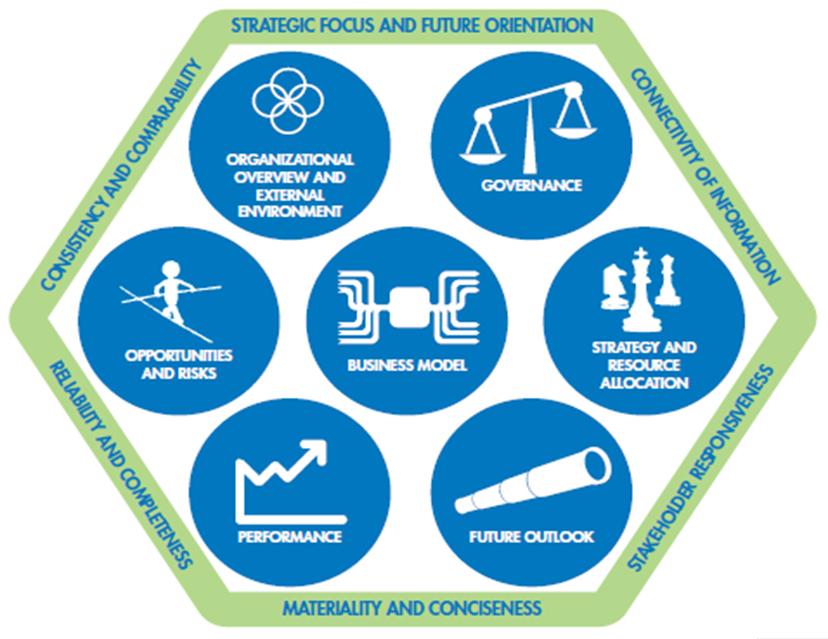
All businesses rely on a variety of capitals for their success, including relationships with customers and the supply chain, the ability to innovate, as well as access to public infrastructure. Increasingly, as the businesses in our Pilot Programme are telling us, when businesses manage all relevant capitals such as intellectual, human, natural, and social and relationships capitals, there is a concurrent shift in focus towards future outlook and the creation of value.
An organization should be held fully accountable for its use of investor funds and this information clearly has a crucial bearing on any decisions providers of financial capital make. Integrated reporting builds on, and complements, rather than replaces the need for financial and corporate social responsibility reporting.
The IIRC Pilot Programme, which is made up of a Business Network with over 90 world-renowned businesses such as Microsoft, Unilever, and the Big Four accounting firms, and over 50 investor organizations, has been driving forward this market-led evolution. The participants’ feed back to the IIRC their experiences whilst on the road to
Until the 15 July 2013 deadline, the IIRC will be calling on all stakeholders to sumbit feedback on the Consultation Draft of the Framework. Please visit www.theiirc.org/consultationdraft2013 and respond to the Draft to ensure the Framework is robust, allowing businesses to speak the language of resilient business.